
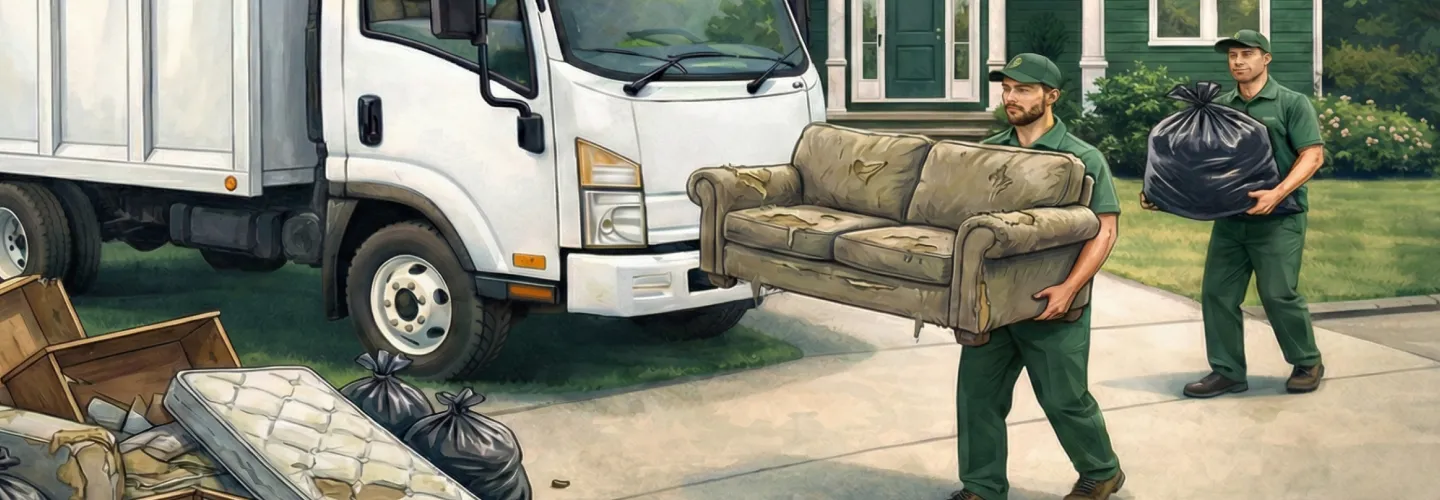
Suwanee Bulk Trash Pickup Services
Choose our Bulk Trash Pickup for reliable, hassle-free service that keeps your property clean and clutter-free—enjoy peace of mind knowing your large items are handled quickly, safely, and responsibly.
Get a Free QuoteOur Suwanee Junk Removal Services
Bulk Trash Pickup in Suwanee, GA – Local Service Guide
Bulk trash pickup in Suwanee, GA is essential for keeping neighborhoods like Olde Towne and Suwanee Station clean and clutter-free. Residents often need removal services during spring cleanouts, after home renovations, or when replacing large items such as mattresses, appliances, or hot tubs. In areas with heavy tree coverage or near the Chattahoochee Point, yard waste and storm debris can accumulate quickly, requiring timely pickup. For residential items, options include donation, recycling, or proper disposal, with logistics influenced by weather, driveway access, and item size. Commercial properties in Suwanee’s Town Center or along Peachtree Industrial Boulevard face unique needs, from discreet office cleanouts to high-volume retail or restaurant waste. Specialty pickups—like for construction debris or estate cleanouts—require advance planning and coordination, especially for larger properties or during community events. For details on local regulations and scheduling, visit the Suwanee Public Works Department.
Key Considerations for Bulk Trash Pickup in Suwanee
- Timing pickups around seasonal cleanouts and storm events
- Checking for required permits or city guidelines
- Using approved disposal and recycling channels
- Ensuring clear access for large trucks and equipment
- Estimating volume and categorizing items for efficient removal
- Coordinating with property managers or HOAs for multi-unit pickups
Benefits of Bulk Trash Pickup in Suwanee
Convenient Scheduling Options
Reliable On-Time Service
Eco-Friendly Disposal Methods
Affordable Bulk Pickup Rates
Experienced Local Team
Safe and Efficient Removal
Coordinating Bulk Trash Pickup with Suwanee's Public Works Department and Gwinnett County Services
Suwanee is located within Gwinnett County, and residential solid waste collection is primarily administered through Gwinnett County's sanitation services rather than a standalone municipal program. Residents should verify their designated hauler and collection schedule through their utility account or HOA. Bulk trash pickup in Suwanee typically requires advance scheduling with the assigned waste hauler, and items must meet specific preparation guidelines before curbside placement.
- Scheduling: Residents must call their designated hauler at least 48 hours in advance to arrange bulk item collection
- Placement: Items should be set curbside by 6:00 AM on the scheduled collection day, separated from regular household waste
- Item limits: Most haulers restrict bulk pickups to a set number of items per collection cycle
- Prohibited curbside items: Hazardous waste, tires, automotive fluids, and construction debris are generally excluded from bulk pickup
The Suwanee Public Works Department oversees rights-of-way and infrastructure maintenance and can direct residents to appropriate waste disposal resources.
Suwanee Public Works Department
340 Town Center Avenue, Suwanee, GA 30024
Phone: (770) 945-8996
Official Website: Suwanee Public Works Department
Prohibited Materials and Hazardous Waste Restrictions for Suwanee Bulk Disposal
Certain materials are strictly prohibited from bulk trash pickup in Suwanee and throughout Gwinnett County. Georgia law and federal regulations govern the handling of hazardous substances, and improper disposal may result in code enforcement action and environmental penalties. Residents must identify restricted items before placing anything curbside and use designated facilities for proper disposal.
- Hazardous waste: Paints, solvents, pesticides, motor oil, and chemical cleaners must be taken to a Gwinnett County Household Hazardous Waste collection event
- Electronics: Televisions, computer monitors, and other e-waste should not be placed in bulk trash; Gwinnett County hosts periodic e-waste recycling events
- Appliances with refrigerants: Refrigerators, freezers, and air conditioning units require refrigerant recovery by a certified technician per EPA Section 608 regulations before disposal
- Batteries: Lead-acid and lithium-ion batteries are prohibited from landfill disposal in Georgia and must be recycled through retail takeback or designated collection sites
- Medical waste and biohazards: These materials require specialized disposal through licensed medical waste haulers
The Georgia Environmental Protection Division administers the state's solid waste management regulations under the Georgia Comprehensive Solid Waste Management Act (O.C.G.A. § 12-8-20 et seq.), which establishes disposal standards and landfill restrictions applicable to all Suwanee residents.
Suwanee Code Enforcement Standards for Curbside Bulk Item Placement
The City of Suwanee enforces property maintenance and nuisance codes that directly affect how and when bulk trash may be placed at the curb. Violations can result in citations and fines, making compliance essential for all residents scheduling bulk pickups. Items left at the curb outside of approved collection windows or placed in unauthorized locations may trigger code enforcement action.
- Timing restrictions: Bulk items should not be placed curbside more than 24 hours before the scheduled pickup date
- Prohibited placement areas: Items may not block sidewalks, storm drains, fire hydrants, or mailboxes
- Stacking and containment: Loose debris must be bagged or bundled; scattered materials on the right-of-way may constitute a nuisance violation
- Yard waste separation: Branches and limbs typically must be cut to lengths of four feet or less and bundled separately from household bulk items
- Repeated violations: Chronic non-compliance may result in escalating fines and mandatory abatement
Suwanee Code Enforcement
340 Town Center Avenue, Suwanee, GA 30024
Phone: (770) 945-8996
Official Website: Suwanee Code Enforcement
Residents should also be aware that Suwanee's Stormwater Management program requires that bulk items and debris not obstruct drainage infrastructure, as blockages can cause flooding and water quality violations.
Recycling and Donation Alternatives for Bulk Items in Suwanee
Before scheduling bulk trash pickup, Suwanee residents are encouraged to explore recycling and donation options that divert reusable materials from landfills. Gwinnett County supports waste reduction goals aligned with Georgia's statewide solid waste management plan, and several local organizations accept furniture, appliances, and household goods in serviceable condition.
- Habitat for Humanity ReStore: Accepts donated furniture, working appliances, building materials, and household items; proceeds support affordable housing programs in the metro Atlanta area
- Goodwill and Salvation Army: Multiple drop-off locations in the Suwanee and Gwinnett County area accept clothing, small furniture, and household goods
- Scrap metal recycling: Metal items such as grills, bed frames, and exercise equipment can be taken to local scrap metal facilities for material recovery
- Appliance recycling: Working refrigerators, washers, and dryers may qualify for utility rebate programs through Georgia Power when replaced with energy-efficient models
- Mattress recycling: Georgia does not currently have a mandatory mattress EPR program; however, some private recyclers in the metro Atlanta area accept mattresses for component recovery
Diverting bulk items from landfill disposal supports the waste reduction objectives outlined by the Georgia Environmental Protection Division and reduces the environmental impact of solid waste management in the Suwanee community.
Building Permit Considerations for Renovation Debris in Suwanee Bulk Trash Removal
Bulk trash generated from home renovation or demolition projects in Suwanee may require building permits and must comply with construction and demolition debris disposal regulations. The City of Suwanee's Building Permits and Inspections division reviews projects that generate significant waste volumes, and certain materials require specialized handling before disposal.
- Permit requirements: Demolition of structures, roof replacements, and major remodeling projects typically require a building permit from the City of Suwanee before work begins
- C&D debris exclusion: Construction and demolition waste—including drywall, lumber, roofing shingles, and concrete—is generally not accepted through standard bulk trash pickup and must be hauled to an approved facility
- Asbestos considerations: Homes built before 1980 may contain asbestos in flooring, insulation, or siding; Georgia requires a licensed asbestos abatement contractor for removal per the EPA Lead-Safe Renovation Rule and state environmental regulations
- Lead paint: Properties constructed before 1978 must follow EPA Renovation, Repair, and Painting (RRP) Rule requirements when disturbing painted surfaces
Suwanee Building Permits & Inspections
340 Town Center Avenue, Suwanee, GA 30024
Phone: (770) 945-8996
Official Website: Suwanee Building Permits & Inspections
What Neighborhoods Do We Serve Throughout Suwanee, GA?
- Suwanee Town Center: Mixed-use area with townhomes and condominiums near shops and restaurants along Town Center Avenue. Bulk pickup coordination may require HOA approval, and curbside placement must not obstruct pedestrian walkways or commercial loading zones.
- Shadowbrook: Established single-family subdivision with mature tree canopy and standard residential driveways. Bulk items are typically placed at the curb without significant access constraints, though overhanging branches may limit large-item maneuvering.
- Olde Atlanta Club: Gated community with larger estate-style homes on wooded lots. Gate access coordination and longer driveways may require advance planning for bulk item collection or hauler access.
- River Ridge: Family-oriented neighborhood with single-family homes and sidewalk-lined streets. Standard curbside bulk pickup is generally straightforward, with adequate street width for collection vehicles.
- McGinnis Ferry Road Corridor: Rapidly developing area with newer subdivisions and townhome communities. HOA regulations in newer developments often include specific guidelines for bulk item placement and timing restrictions.
- Suwanee Station: Neighborhood adjacent to the historic downtown area featuring a mix of older and newer residential construction. Homes built before 1980 may require hazardous material assessments when disposing of renovation-related bulk items.