
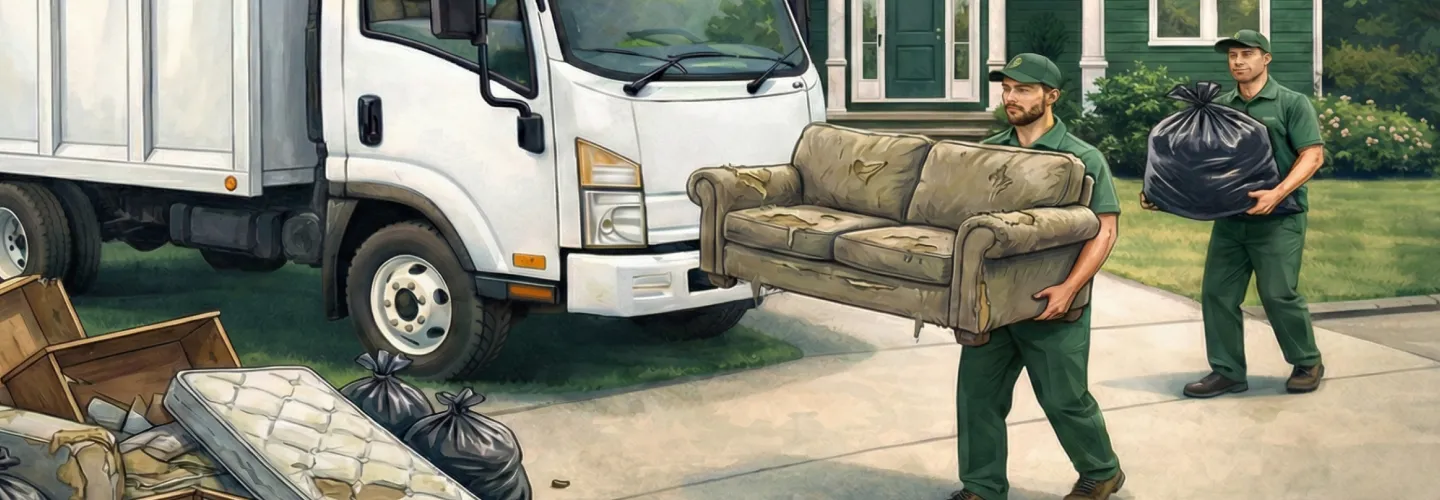
Suwanee Storage Unit Cleanout Services
Choose our Storage Unit Cleanout service for fast, reliable, and hassle-free removal—so you can enjoy a clean, organized space without lifting a finger.
Get a Free QuoteOur Suwanee Junk Removal Services
Storage Unit Cleanout in Suwanee, GA – Local Service Guide
Storage unit cleanouts in Suwanee, GA, are often prompted by life transitions, seasonal changes, or the need to reclaim valuable space. Residents in neighborhoods like Olde Atlanta Club and Suwanee Station frequently schedule cleanouts during spring or after major moves, especially when replacing furniture, appliances, or electronics. Local disposal options include donation centers, recycling facilities, and municipal drop-off sites, but access and weather—especially during humid summers or rainy spells—can impact logistics. For residential spaces such as garages or basements, Suwanee’s tree coverage and occasional flooding in areas near Sims Lake Park may drive more frequent cleanouts, particularly after storms or during yard waste cycles. Commercial clients in Suwanee’s Town Center or Peachtree Industrial Boulevard often require discreet, timely service to handle office, retail, or warehouse cleanouts, with volume and operational needs varying by sector. Specialty projects like estate, foreclosure, or construction debris cleanouts demand careful planning and coordination, especially when navigating local property requirements and timelines.
Key Considerations for Storage Unit Cleanout in Suwanee
- Timing around local move-in/move-out seasons and weather
- Access to storage facilities and parking logistics
- Proper disposal or recycling channels for bulky items
- Volume of items and need for multiple trips
- Coordination with facility management or city guidelines
- Category-specific handling (e.g., electronics, hazardous materials)
For details on local disposal rules and resources, visit the Suwanee Public Works Department.
Benefits of Storage Unit Cleanout in Suwanee
Fast and Efficient Cleanouts
Affordable Pricing Options
Eco-Friendly Disposal Solutions
Experienced Local Team
Flexible Scheduling
Comprehensive Junk Removal
Coordinating Storage Unit Cleanout Disposal with Suwanee's Public Works and Gwinnett County Solid Waste Programs
Storage unit cleanouts in Suwanee often produce large volumes of mixed materials—furniture, boxes, appliances, and household goods—that require proper disposal through municipal and county channels. Because Suwanee is located within Gwinnett County, residents must coordinate with both city and county resources for compliant waste handling. Gwinnett County operates solid waste collection services and maintains disposal infrastructure that serves Suwanee residents directly. Before beginning a storage unit cleanout, individuals should inventory all items to determine which materials qualify for curbside bulk collection, which require transfer station drop-off, and which are prohibited from standard waste streams.
- Bulk items such as furniture and large household goods may require scheduled pickup through Gwinnett County solid waste services
- Electronics and appliances must be separated and handled through designated recycling channels
- Hazardous materials including paint, chemicals, and batteries are prohibited from regular trash collection
- Reusable items in good condition should be directed to local donation programs before disposal
Suwanee Public Works Department
330 Town Center Avenue, Suwanee, GA 30024
Phone: (770) 945-8996
Official Website: Suwanee Public Works Department
The Suwanee Public Works Department oversees rights-of-way, stormwater management, and infrastructure maintenance. Residents should contact this department regarding any street access or right-of-way concerns that may arise during large-scale storage unit cleanout projects requiring truck loading in public areas.
Sorting and Separating Storage Unit Contents Under Georgia Solid Waste Regulations
Georgia's solid waste management framework, administered by the Georgia Environmental Protection Division (GA EPD), establishes requirements for proper waste classification and disposal that directly affect storage unit cleanout projects. All materials removed from a storage unit must be sorted into appropriate categories before transport to disposal or recycling facilities. Failure to properly separate regulated materials—such as electronics, tires, and lead-acid batteries—can result in rejection at transfer stations and potential code enforcement action.
- General household items (clothing, books, kitchenware): Accepted at most solid waste facilities or donation centers
- Furniture and mattresses: May be accepted at Gwinnett County transfer facilities; check for any applicable fees
- Tires: Georgia prohibits tire disposal in municipal solid waste landfills; tires must go to licensed tire recyclers
- Lead-acid batteries: Banned from landfill disposal in all states; must be returned to retailers or recycling facilities
- Paints, solvents, and chemicals: Classified as household hazardous waste; must be taken to designated collection events or facilities
Gwinnett County periodically hosts Household Hazardous Waste Collection Events where Suwanee residents can drop off paints, pesticides, automotive fluids, and other regulated materials at no charge. Residents should verify event dates and accepted materials through the county's solid waste division before transporting hazardous items.
Electronics and Appliance Disposal Requirements for Suwanee Storage Unit Cleanouts
Storage units frequently contain outdated electronics and small appliances that require special handling during cleanout. While Georgia does not currently enforce a statewide electronics landfill ban, responsible disposal through certified e-waste recyclers remains strongly recommended by the Georgia Environmental Protection Division. Appliances containing refrigerants—such as refrigerators, freezers, window air conditioning units, and dehumidifiers—are subject to federal regulations under EPA Section 608, which mandates certified refrigerant recovery before disposal.
- CRT televisions and monitors: Contain lead and should be recycled through certified e-waste processors
- Computers, printers, and peripherals: May contain mercury, cadmium, and other heavy metals requiring proper recycling
- Refrigerant-containing appliances: Must have refrigerant recovered by an EPA-certified technician before disposal or scrap
- Small electronics (phones, tablets, cables): Accepted at many retail electronics recycling drop-off locations
- Batteries: Lithium-ion and rechargeable batteries pose fire hazards in waste streams and must be recycled separately through programs such as Call2Recycle
Suwanee Code Enforcement
330 Town Center Avenue, Suwanee, GA 30024
Phone: (770) 945-8996
Official Website: Suwanee Code Enforcement
Improper disposal of electronics or appliances—including illegal dumping near storage facilities—may result in code enforcement violations. Suwanee's Code Enforcement division investigates property maintenance complaints and zoning violations related to improper waste storage or disposal.
Stormwater Protection and Environmental Compliance During Storage Unit Cleanouts in Suwanee
Suwanee maintains an active Stormwater Management program designed to protect local waterways and prevent pollution from entering the storm drain system. During storage unit cleanouts, liquid waste, chemical residues, and debris can pose environmental risks if not properly contained during transport and loading. All cleanout activities conducted in parking lots or near storm drains must prevent materials from entering the stormwater system.
- Liquid waste (old paint, cleaning products, automotive fluids) must be contained in sealed, leak-proof containers during transport
- Loose debris such as packing peanuts, insulation, and small particles should be bagged or covered to prevent wind dispersal
- Cleaning chemicals used during unit turnover must not be discharged into parking lot drains or storm inlets
- Dust and particulate matter from deteriorated items should be managed to prevent airborne contamination
- Spill response: Any accidental spills of chemicals or fluids during loading must be cleaned immediately using absorbent materials
Suwanee Stormwater Management
330 Town Center Avenue, Suwanee, GA 30024
Phone: (770) 945-8996
Official Website: Suwanee Stormwater Management
Violations of stormwater regulations can result in fines and remediation requirements. Suwanee's stormwater program operates under federal National Pollutant Discharge Elimination System (NPDES) permit requirements, making environmental compliance during all waste-generating activities—including storage unit cleanouts—a municipal priority.
Donation and Material Recovery Options Before Storage Unit Disposal in Suwanee
Before disposing of storage unit contents, Suwanee residents should evaluate items for donation or material recovery potential. Diverting reusable goods from landfills supports Georgia's waste reduction goals and benefits local charitable organizations. Many items commonly found in storage units—furniture, clothing, household goods, and working electronics—may qualify for tax-deductible donations when given to registered nonprofit organizations.
- Furniture in good condition: Local Habitat for Humanity ReStore locations in the greater Gwinnett County area accept furniture, building materials, and household items
- Clothing and textiles: Accepted at numerous donation drop-off bins and thrift stores throughout Suwanee and surrounding communities
- Books and media: Local libraries and literacy organizations may accept donations of books, DVDs, and educational materials
- Working appliances: Small and large appliances in functional condition can be donated rather than scrapped
- Scrap metal: Metal items such as shelving, bed frames, and tools can be taken to licensed scrap metal recyclers for material recovery
Suwanee Economic & Community Development
330 Town Center Avenue, Suwanee, GA 30024
Phone: (770) 945-8996
Official Website: Suwanee Economic & Community Development
Suwanee's Economic & Community Development department can provide information about local nonprofit organizations and community programs that accept donated goods, supporting both waste diversion and community benefit.
What Neighborhoods Do We Serve Throughout Suwanee, GA?
- Suwanee Town Center: The walkable mixed-use core features commercial and residential properties near Town Center Park. Storage facilities in this area may have limited truck staging space due to high pedestrian traffic and shared parking areas, requiring advance coordination for large cleanout projects.
- Shadowbrook: This established single-family residential community features homes with standard garage and driveway access. Residents downsizing or managing estate transitions frequently utilize nearby storage facilities, generating cleanout needs that include furniture, seasonal items, and household goods.
- Suwanee Station: A master-planned community with a mix of single-family homes and townhomes. HOA regulations may govern temporary debris staging and truck access within the neighborhood, requiring advance notification for cleanout-related hauling activity.
- George Pierce Park Area: Located near one of Suwanee's largest recreational facilities, this area includes both residential subdivisions and commercial corridors. Proximity to major roadways provides efficient truck routing for storage unit cleanout transport to county disposal facilities.
- McGinnis Ferry Road Corridor: A rapidly developing commercial and residential corridor with numerous self-storage facilities. High traffic volumes during peak hours may affect scheduling for cleanout projects; early morning or midday access is generally recommended.
- Old Town Suwanee: Characterized by older homes and smaller lot sizes near the historic downtown area. Narrower residential streets may require careful truck positioning during storage unit cleanout loading, and proximity to Town Center events may affect weekend access.